
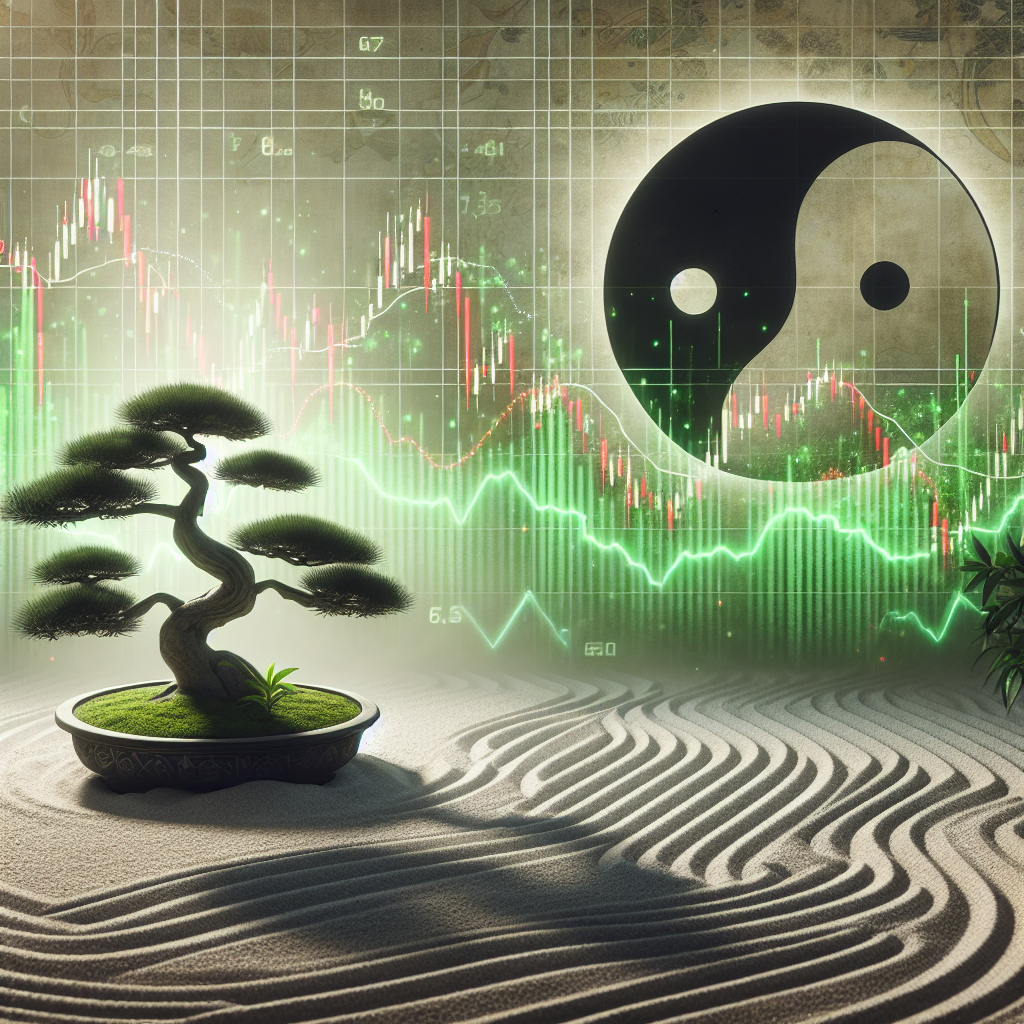
Imagine a bustling trading floor where screens flicker with ever-changing stock prices and analysts furiously crunch numbers. Now picture a serene Taoist temple, where monks contemplate the ebb and flow of the universe. At first glance, these two worlds couldn’t be further apart. Yet, in an unexpected twist, the ancient wisdom of Taoism is finding its way into the high-stakes realm of financial markets, offering traders a fresh perspective on navigating the unpredictable currents of global finance.
This fusion of East and West isn’t just a passing fad. It’s a growing trend that’s catching the attention of savvy traders and market analysts alike. But how exactly does a philosophy rooted in harmony and balance apply to the often chaotic world of day trading and market analysis? Let’s dive in and explore this fascinating intersection of ancient wisdom and modern finance.
Understanding Taoism: More Than Just Going with the Flow
Before we can apply Taoist principles to trading, we need to understand what Taoism is all about. At its core, Taoism is an ancient Chinese philosophy that emphasizes living in harmony with the Tao, or “the Way.” It’s not about passivity or inaction, as some might think. Instead, Taoism encourages a deep understanding of natural cycles and an ability to adapt to change.
Key Taoist concepts include:
1. Wu Wei: Often translated as “non-action,” but better understood as effortless action or going with the flow.
2. Yin and Yang: The balance of opposing forces in the universe.
3. Adaptability: Embracing change rather than resisting it.
4. Simplicity: Stripping away the unnecessary to focus on what’s essential.
Now, you might be wondering, “What does this have to do with my trading strategy?” As it turns out, quite a lot.
Taoism in Action: Real-World Trading Examples
Let’s look at how some traders are putting Taoist principles into practice:
- Adaptability in Volatile Markets:
John Chen, a day trader based in Hong Kong, credits Taoist philosophy for his success during the 2020 market crash. “When everyone was panicking, I remembered the Taoist teaching of adapting to change,” Chen explains. “Instead of fighting the downturn, I adjusted my strategy to profit from short-term volatility. It was like surfing a wave instead of trying to stop the ocean.” - Wu Wei and Overtrading:
Sarah Thompson, a forex trader in London, found that the concept of Wu Wei helped her overcome a common pitfall: overtrading. “I used to think I needed to be in the market constantly to make money,” she says. “But applying Wu Wei taught me that sometimes, the most profitable action is no action at all. Now, I wait for high-probability setups instead of forcing trades.” - Yin and Yang in Risk Management:
Hedge fund manager David Goldstein uses the Yin and Yang concept to balance his portfolio. “I see bullish and bearish positions as complementary forces, not opposites,” Goldstein explains. “This approach helps me maintain equilibrium in my fund, even when individual sectors are volatile.”
The Quantitative Quandary: Balancing Data and Intuition
In today’s tech-driven trading world, quantitative analysis reigns supreme. But can Taoist principles coexist with algorithms and big data? Dr. Lisa Zhang, a professor of finance at MIT, believes they can—and should.
“Quantitative models are powerful, but they’re based on historical data and assumptions,” Dr. Zhang points out. “Taoist thinking encourages us to consider the ever-changing nature of markets. It’s not about abandoning quant strategies, but complementing them with a more holistic view.”
Some quant traders are even incorporating Taoist principles into their algorithms. For example, adaptive AI models that adjust to market “flow” rather than rigidly following pre-set rules show promise in capturing subtle market shifts.
The Dark Side of the Tao: Potential Pitfalls
While applying Taoist principles to trading can offer fresh insights, it’s not without its critics. Dr. Michael Stern, a behavioral economist at Stanford, warns against oversimplification.
“There’s a danger in cherry-picking philosophical concepts and applying them to complex financial systems,” Stern cautions. “Traders might use Taoist ideas to justify inaction when decisive moves are needed, or they might misinterpret ‘going with the flow’ as blindly following market trends.”
Moreover, the emphasis on intuition and “feeling” the market could lead some traders to neglect rigorous analysis and risk management. It’s crucial to strike a balance between Eastern wisdom and Western analytical techniques.
The Future of Tao-Inspired Trading
As global markets become increasingly interconnected, the integration of diverse philosophical approaches is likely to continue. The challenge lies in thoughtfully adapting these ancient concepts to modern financial realities.
For day traders looking to explore this approach, start small. Try incorporating one Taoist principle, like adaptability or non-action, into your existing strategy. Observe how it affects your decision-making and results over time.
Remember, the goal isn’t to become a Taoist monk, but to expand your trading toolkit with time-tested wisdom. Who knows? The next big market insight might just come from a 2,500-year-old philosophy.
In the end, whether you’re staring at candlestick charts or contemplating the balance of Yin and Yang, the key is to remain open to new perspectives. In the ever-evolving world of finance, those who can blend diverse insights may just find themselves riding the wave of success.


 k-xs
k-xs 