
Once you bank a lot of hours, other voices don’t rattle your calls. But when I was less experienced I would get shaken out of good positions when I saw people with big egos making calls or telling me I was wrong. I see a lot of the people in the chat years later with the same level of confidence, and I understand now that those personalities don’t even trade. As I went along, I started to understand that a lot of these voices are extremely biased and often the ideas underneath them are not particularly compelling. All you have to do is write down a name, and the call that they make, and the outcome and do it for each of the personalities in the chat. Every “Alert! Crashing now!,” every call like that, you’ll see really quickly how poor the signal is. A lot of times you can enter the opposite way and make money.
“Don’t predict the price, trade it.” – Mike Bellafiore
After taking some time to understand trader psychology and actually measuring the accuracy of the voices, it gets a lot easier to be resilient and just lean on your system. Seriously, so many of those strong loud voices aren’t trading or are trading demo accounts, probably because they lost everything already. I’m speaking from experience, this is the hardest thing I’ve ever done and after years of research and trading experience, I’m only just now starting to find some consistency. I see many of those loud voices after years and I ask them again, are you actively trading? The answer is always “no.” They’re holding. Don’t take their advice, they aren’t trading and they aren’t learning. That’s not the voice to listen to. Don’t let it affect you.
You’ll see many traders around you are likely to pick up Elliot Wave, Lunar Phase trading, Astrology and Fibonacci sequences that depend on an absolute ordering of the universe or impact from the gravitational pull of astral bodies. While there is some interesting historic correlation between moon phases and the markets, it’s relatively subtle.
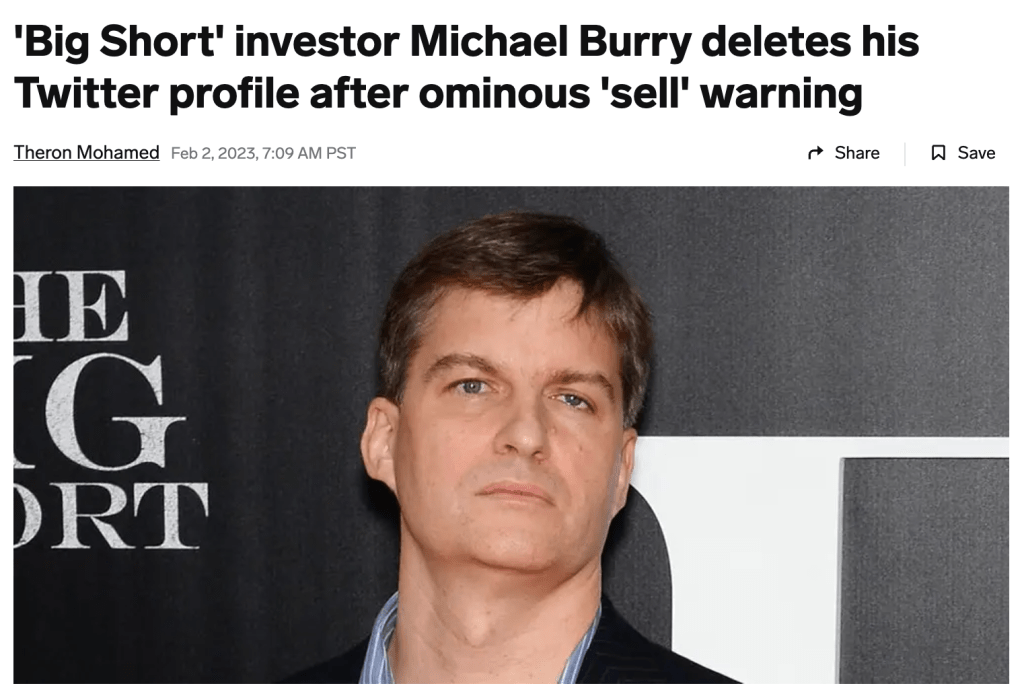
News is not much better if traded in isolation. You might start to make good predictions on the ebb and flow based on economic data or news, but it’s not going to replace reading the market moment to moment. News events may be a catalyst for action, but the price action can play out far differently than you expect. Trading price action solely based on news headlines is not much different than trading based solely on the news phase. Whatever you predict based is likely to be wrong, at least until you’ve logged a lot of time watching how markets respond to events. A good example is from Dhalio, where, after Nixon went off the gold standard, he expected the S&P to drop, but it did the opposite. It went up and up and up. Michael Burry also posted “sell” to his twitter not long ago, PCE came in hotter than expected and the market rallied, it didn’t sell off. Michael Burry deleted his twitter account that day.
The market has the most relevant information, and the sentiment and direction change dramatically day to day, so you have to keep reading to gauge the probability of an outcome. Mike Bellafiore says: “Don’t predict the price, trade it.” You can think whatever you want, but many of the great traders I’ve seen talk less about an absolute ordering of things, and more about probability of different outcomes.
The major issue for you as a trader is congnitive bias related to your ideas that come from secondary data. You might ignore the price, or be biased in a direction opposite to the trend which can cause you to do things like fading trend days, which is about the worst thing you can do to your account. If the market is moving up without pulling back, and you’re shorting it because you think you know better than the market, you deserve to lose. The market knows, it is the ultimate source of truth, and it must be respected. If you don’t respect the market, it’ll take from you until you do.
Respect the market.
If you’re in chats, expect to see people argue with you if you pose an alternative view. I’ve seen people completely locked into a bias and they will ignore price data, news events, or anything else. Conviction can be a benefit if you want to hold for years. A 24 month hold is not long enough to discard current day risks. A 10 year hold might be, but even then, institutions are saying that passive investment probably perform like it has historically.
A recent example of someone holding onto a bias and telling other people their wrong comes from the TradingView chat. Someone there was criticizing people (eg me) for shorting intraday and is completely locked into this bullish perspective as he buys with nasdaq over 18k, at the all time highs. This person is not a day trader but it caught my eye when, on multiple occasions he harped on me for shorting. I asked some questions and found that his strategy is to hold until 2026 because a pig farmer in the late 1800s predicted that’s when the market will peak. “The Benner Cycle” it’s called. I asked GPT to explain it for us:
The Benner Cycle is a forecasting system for financial markets that was developed by Samuel Benner, a prosperous farmer who turned to studying market cycles after losing his fortune in the Panic of 1873. His work led to the publication of “Benner’s Prophecies of Future Ups and Downs in Prices” in 1875, where he attempted to predict the future of commodity prices such as pork, corn, and cotton, as well as general economic trends.
Benner’s methodology is based on a simple cyclic pattern of highs and lows in economic activity and market prices, with a particular focus on the timing of these peaks and troughs. He identified patterns over cycles of 8, 9, and 10 years for economic highs and lows, suggesting that these cycles could be used to predict future market movements. Specifically, his forecasts included:
- A three-year cycle in pig iron prices (a proxy for economic activity at the time).
- An 8 to 9-year cycle for business activity peaks, with recessions or panics occurring at predictable intervals.
- An 11-year cycle for cotton prices.
Benner believed that these cycles were driven by natural human behaviors and economic activities that tend to repeat over time. Despite the simplicity and the age of the Benner Cycle, some traders and investors still look at its patterns as a tool among many for trying to forecast market trends.
You can think whatever you want, but the markets change all the time and the probability of a setup playing out can be re-evaluated to protect your capital. If you aren’t watching it, especially if you’re in drawdown, then you risk potentially significant loss. The interplay between all of the different forces engaging in buying in selling is so magnificently complex, nothing can explain all of the forces at play in a paragraph. Everything that happened before is different than what will happen tomorrow. Especially with advances in technology and artificial intelligence.


 k-xs
k-xs 
Leave a comment